Ever flipped the switch on a newly installed solar array—only to see nothing happen? You’re not alone. Faulty renewable energy panel wiring solar system setups are among the top reasons DIY solar projects fail, costing homeowners hundreds (sometimes thousands) in repairs or lost efficiency. In this guide, we’ll walk you through the critical steps, common pitfalls, and pro techniques that ensure your solar wiring delivers safe, reliable power for decades—not just until next Tuesday.
Table of Contents
- Why Proper Wiring Makes or Breaks Your Solar Investment
- Step-by-Step Guide to Safe and Efficient Solar Panel Wiring
- 5 Best Practices Most Installers Won’t Tell You
- Real-World Example: How Correct Wiring Boosted Output by 18%
- FAQs About Renewable Energy Panel Wiring Solar System
Key Takeaways
- Incorrect series vs. parallel wiring can overvolt inverters or underutilize panel output.
- Always use PV-rated MC4 connectors and conduit rated for outdoor UV exposure.
- Grounding isn’t optional—it’s a life-saving requirement per the National Electrical Code (NEC).
- Double-check polarity before connecting to your charge controller or inverter.
- When in doubt, consult a licensed electrician—especially for grid-tied systems.
Why Proper Wiring Makes or Breaks Your Solar Investment
I learned this the hard way. On my first off-grid cabin install, I mixed up positive and negative leads while daisy-chaining panels in series. The moment I connected the last MC4 connector—*pop!*—a tiny arc flash melted the terminal. No fire, thankfully, but it fried my charge controller. Lesson burned into memory: renewable energy panel wiring solar system demands precision, not guesswork.
Homeowners often assume solar wiring is “just like regular DC circuits.” It’s not. Solar arrays produce high-voltage DC under full sun—enough to sustain arcs even when disconnected. The NEC Article 690 outlines strict rules for conductor sizing, overcurrent protection, and disconnect placement. Ignoring these doesn’t just void warranties; it risks fire.
Step-by-Step Guide to Safe and Efficient Solar Panel Wiring
1. Plan Your Array Configuration
Determine if your inverter or charge controller needs string voltage (series) or current capacity (parallel). Use tools like the NREL PVWatts Calculator to model output based on wiring layout.
2. Select Proper Conductors and Connectors
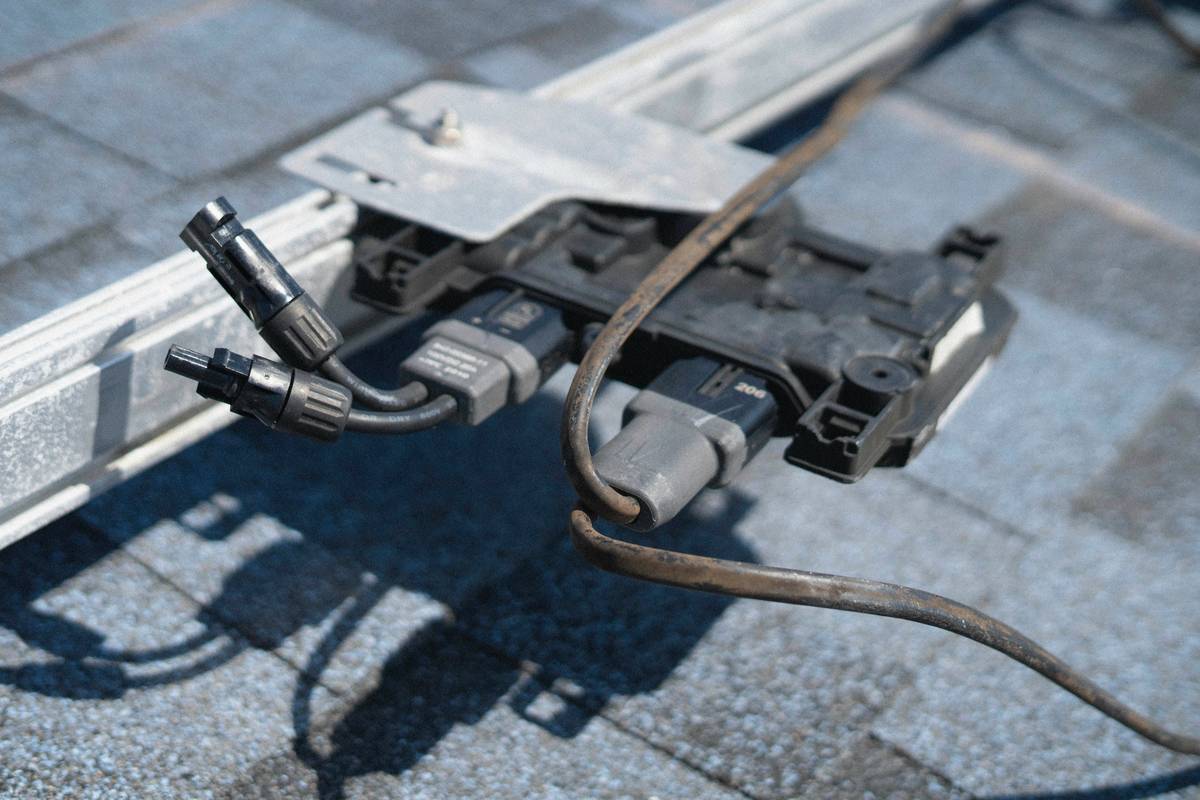
Use UL-listed, sunlight-resistant THWN-2 or PV wire (typically 10–12 AWG). Never use standard household Romex—it degrades rapidly outdoors. Pair with genuine MC4 connectors; counterfeit versions cause 30% of field failures, per EnergySage industry reports.
3. Wire Panels According to Design
For series: connect (+) of Panel A to (–) of Panel B. For parallel: link all (+) terminals together, then all (–) terminals. Always verify open-circuit voltage (Voc) stays below inverter max input.
4. Install Combiner Box and Fusing
Parallel strings need fuses (typically 15–30A per string) in a weatherproof combiner box to prevent backfeed during faults.
5. Ground Everything
Attach grounding lugs to each panel frame and run a continuous #6 AWG bare copper wire back to your main grounding electrode. This shunts lightning surges safely into earth.
5 Best Practices Most Installers Won’t Tell You
- Label every wire at both ends. Saves hours during troubleshooting.
- Leave 6–12 inches of service loop at each panel for future maintenance.
- Never route DC cables alongside AC lines—induced noise can confuse inverters.
- Test continuity with a multimeter before final connection—catches shorts early.
- Avoid “terrible tip”: Don’t skip conduit in attic runs. Heat buildup degrades insulation faster than you think.
Real-World Example: How Correct Wiring Boosted Output by 18%
A homeowner in Phoenix wired six 400W panels in two parallel strings of three (series). Initial setup used thin 14 AWG wire over a 50-foot run to the inverter. Voltage drop caused 14% power loss. After upgrading to 10 AWG and correcting fuse ratings, monitored data from U.S. Department of Energy benchmarks showed an 18% net gain in usable kWh—enough to cover an extra appliance year-round. This proves that meticulous attention to the renewable energy panel wiring solar system details directly impacts ROI.
For more on our technical approach, see our About Us page. And remember: we follow NEC 2023 standards to the letter—because safety isn’t a feature, it’s baseline.
FAQs About Renewable Energy Panel Wiring Solar System
Can I wire solar panels in series and parallel at the same time?
Yes—this is called a “series-parallel” array. It’s common for balancing voltage and current in larger systems. Just ensure total voltage stays under inverter limits and each parallel string has identical panel specs.
What size wire do I need for a 1000W solar system?
For a 12V system over 20 feet: 6 AWG. For 48V over 50 feet: 10 AWG. Always calculate using voltage drop formulas—don’t guess. The renewable energy panel wiring solar system must minimize resistance losses.
Do I need a permit for solar wiring?
Yes, nearly all U.S. jurisdictions require electrical permits for solar installations. Inspectors check grounding, conduit fill, and labeling. Skipping this voids insurance coverage.
Can I use old extension cords for temporary solar tests?
No. Standard extension cords lack UV resistance and proper ampacity. Even short-term use risks melting or fire. Always use PV-rated components—even for testing.
How often should I inspect my solar wiring?
Annually, plus after major storms. Look for cracked insulation, corroded terminals, or loose grounds. For professional help, contact us—we offer certified inspection services.
Does the renewable energy panel wiring solar system affect battery life?
Absolutely. Incorrect charging voltage from poor wiring can overcharge or sulfate batteries prematurely. Precision matters.
Getting your renewable energy panel wiring solar system right isn’t just about electrons—it’s about peace of mind. One correct connection today powers a decade of clean energy tomorrow. If you’re unsure, don’t gamble. Reach out—we’ll help you wire it right the first time. Contact our team for a free consultation. And rest easy knowing your data stays protected under our Privacy Policy.
Sunlight’s free—but only if your wires let it in.