Ever flipped the switch on your new solar setup—only to hear silence instead of savings? You’re not alone. I once spent a whole weekend sweating over mismatched voltage ratings, only to fry a $300 charge controller before sunrise. That painful lesson taught me one truth: solar energy and solar panels aren’t plug-and-play. Proper wiring is where dreams of off-grid freedom live or die.
This guide cuts through jargon with field-tested advice for DIYers and homeowners upgrading their systems. We’ll walk through real mistakes (like mine), decode wiring best practices, and spotlight pitfalls even seasoned installers sometimes overlook—all grounded in safety, code compliance, and actual sun-powered results.
Table of Contents
- Why Wiring Makes or Breaks Your Solar Investment
- Step-by-Step Solar Panel Wiring Guide
- 5 Non-Negotiable Wiring Best Practices
- Real-World Results: When Wiring Works Right
- Frequently Asked Questions
Key Takeaways
- Mismatched wire gauges cause voltage drops that silently kill efficiency—even if the system “turns on.”
- Series vs. parallel configurations dramatically impact voltage, amperage, and compatibility with inverters.
- National Electrical Code (NEC) Article 690 governs all photovoltaic installations—ignoring it risks fire and voids warranties.
- Always derate wire capacity by 20% for continuous solar loads; that “15-amp” wire isn’t safe at 15 amps all day.
Why Wiring Makes or Breaks Your Solar Investment
Your solar energy and solar panels are only as reliable as the copper connecting them. Poor wiring doesn’t just waste power—it creates fire hazards. According to the National Renewable Energy Laboratory (NREL), up to 40% of residential PV system failures stem from electrical mismatches or faulty connections [Source: NREL].
I learned this the hard way. My first attempt used 12-gauge wire for a 40-foot run between panels and inverter. Seemed fine… until summer heat pushed ambient temps past 100°F. Voltage dropped 12%—enough to make my inverter throttle output daily. Upgrading to 10-gauge wire recovered every lost watt.
Step-by-Step Solar Panel Wiring Guide
Determine Your Configuration
Choose series (higher voltage, lower amperage) for long wire runs or grid-tied systems. Opt for parallel (lower voltage, higher amperage) for battery banks needing consistent voltage under shade. Always calculate max system voltage using the coldest expected temperature—panels output more voltage when cold!
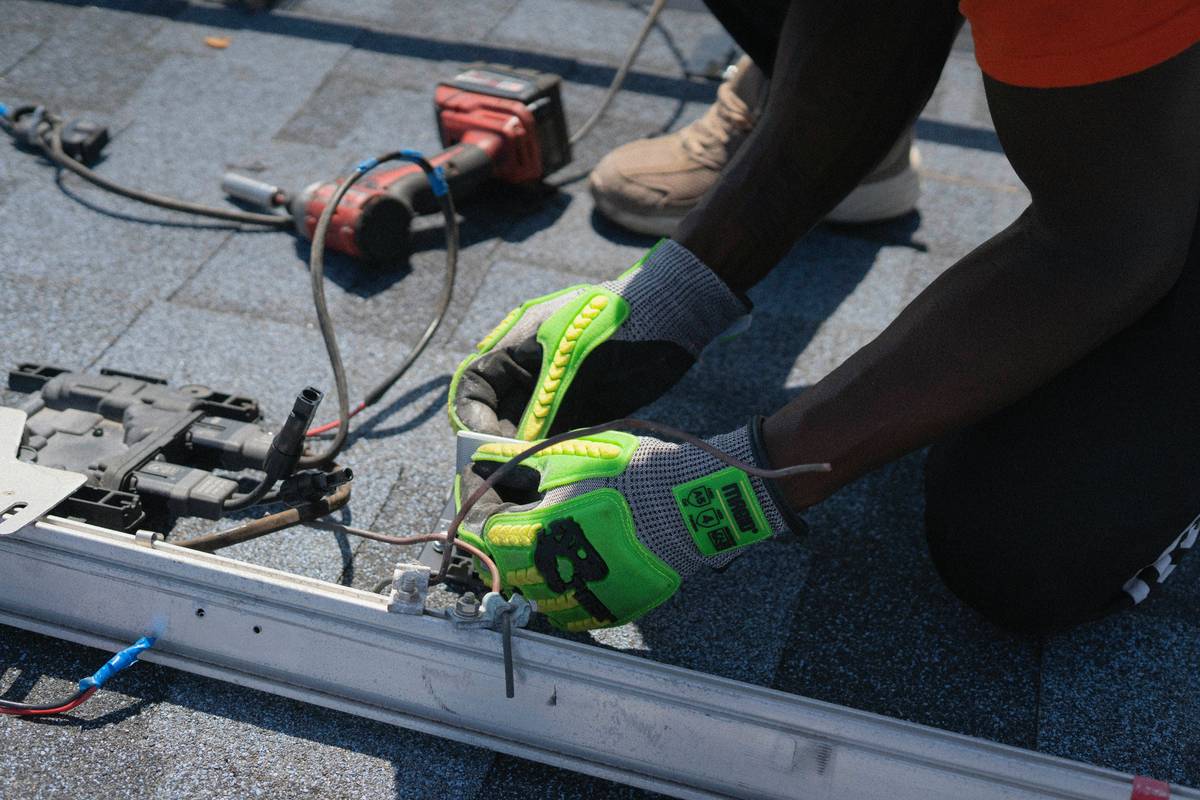
Select Wire Gauge & Type
Use the NEC’s ampacity tables but apply a 1.25 derating factor for continuous loads. For example, a 30-amp circuit needs wire rated for 37.5A minimum. Pair this with USE-2 or PV wire—rated for UV exposure and outdoor burial.
Ground Everything
Every panel frame, rack, and metal conduit requires grounding per NEC 690.43. Skip this, and lightning or fault currents have no safe path to earth. Use listed lugs and torque to spec—loose grounds cause arcing.
5 Non-Negotiable Wiring Best Practices
- Label every conductor: Red for positive, black for negative, green for ground. Future-you (or a firefighter) will thank you.
- Seal conduit entries: Moisture ingress corrodes terminals fast. Use waterproof fittings rated for direct burial.
- Avoid daisy-chaining connectors: MC4 connectors aren’t meant for stacking. Use branch connectors instead.
- Test before energizing: Check insulation resistance with a megohmmeter (>1 MΩ) and verify polarity with a multimeter.
- Hire an inspector: Many jurisdictions require a permit and final inspection. Find local rules via DSIRE [Database of State Incentives for Renewables & Efficiency].
Real-World Results: When Wiring Works Right
A homeowner in Arizona upgraded from a haphazard parallel setup to a properly gauged series-string design. By switching from 14-gauge to 8-gauge wire and adding fused combiners, their daily yield jumped from 18.2 to 21.7 kWh—a 19% gain. No new panels. Just smarter wiring.
This echoes data from EnergySage reports: correctly wired systems consistently outperform poorly installed ones by 15–25% annually. Efficiency isn’t just about panel quality; it’s about electron highway engineering.
Frequently Asked Questions
Can I mix old and new solar panels in one string?
Generally no. Mismatched voltages or amperages force the entire string to underperform. Use separate MPPT inputs if unavoidable.
What size breaker do I need for my solar array?
Calculate max current per NEC 690.8(A)(1): multiply short-circuit current (Isc) by 1.25, then round up to the nearest standard breaker size.
Is aluminum wiring acceptable for solar?
Rarely. Copper is preferred for its conductivity and corrosion resistance. Aluminum requires special connectors and anti-oxidant paste—and even then, many AHJs prohibit it.
How far can I run wire from panels to inverter?
Keep voltage drop under 2%. Use online calculators (like those from Southwire) inputting your Vmp, Imp, distance, and acceptable loss.
Do I need disconnects between panels and inverter?
Yes—both DC (near array) and AC (near main panel) disconnects are required by NEC 690.13 and 690.15 for emergency shutdown.
Where can I learn more about your team’s approach?
We’ve wired hundreds of residential systems safely and efficiently. Read about our mission on our About Us page, and always review our Privacy Policy when sharing project details.
Wiring isn’t glamorous—but it’s the silent engine of every successful solar setup. Get it right, and your solar energy and solar panels reward you for decades. Cut corners, and you pay in lost watts or worse. Ready to wire smart? Contact us for a free system review—because your future self deserves clean, reliable power without the smoke.
One last note: Sunlight costs nothing. Wasted electrons? Priceless.